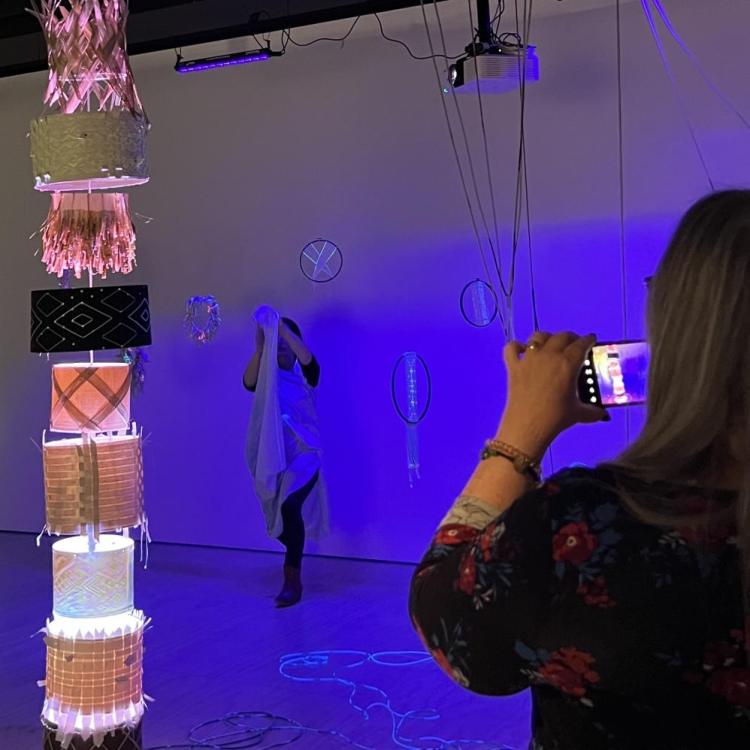
It was great to have our ongoing partners and collaborators AwhiWorld at Weaving Water @ Yarun, Treecreate’s major project for 2023.
Dr Maggie Buxton presented a talk at the symposium, which explored the amazing work of AwhiWorld, which included some of the projects Tracey has been involved in over the past few years. You can check out her presentation below.
Our collaboration goes under the working title of Tasman Threads and seeks to link together our values, places and practice.
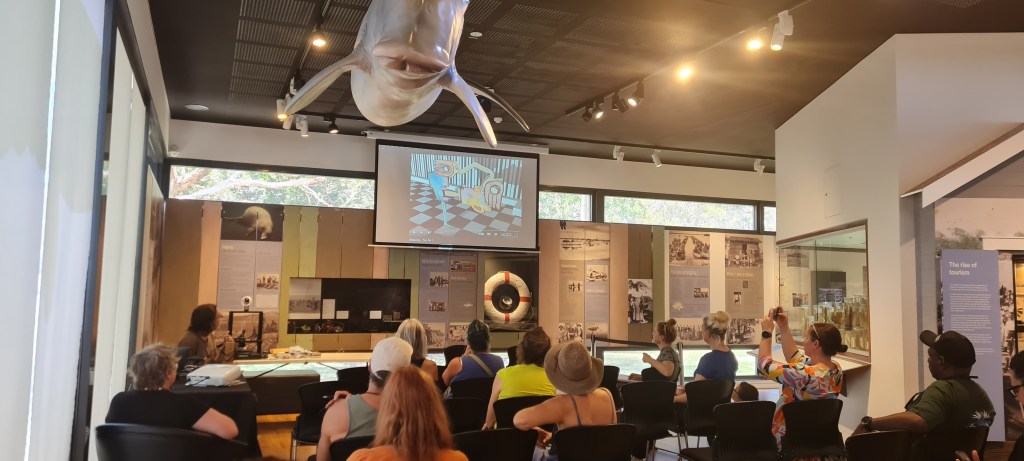
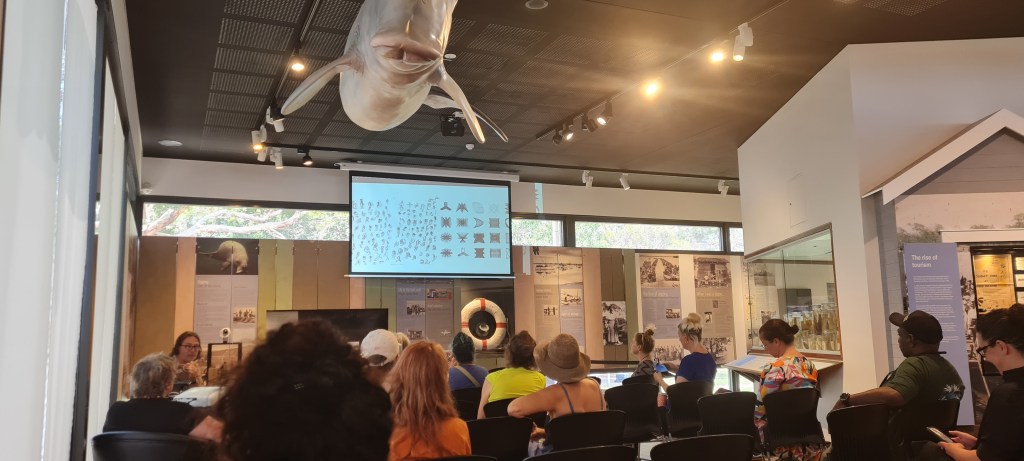
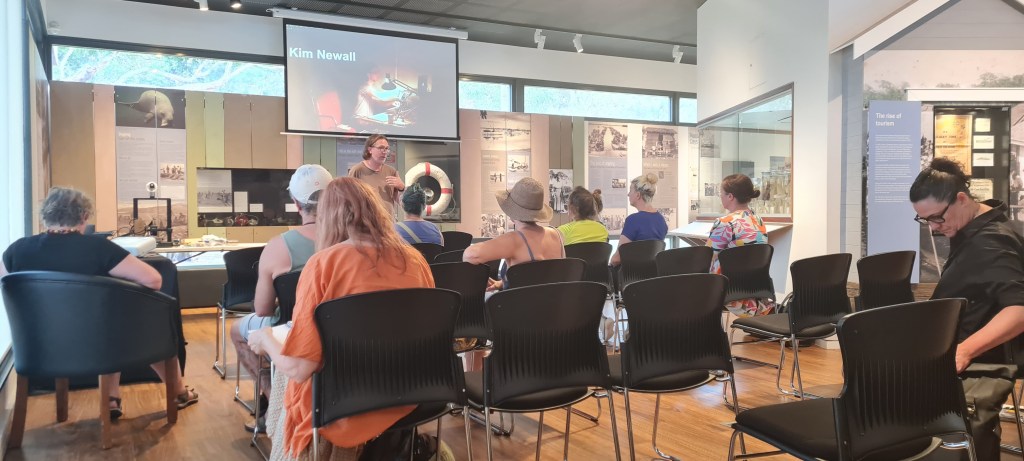
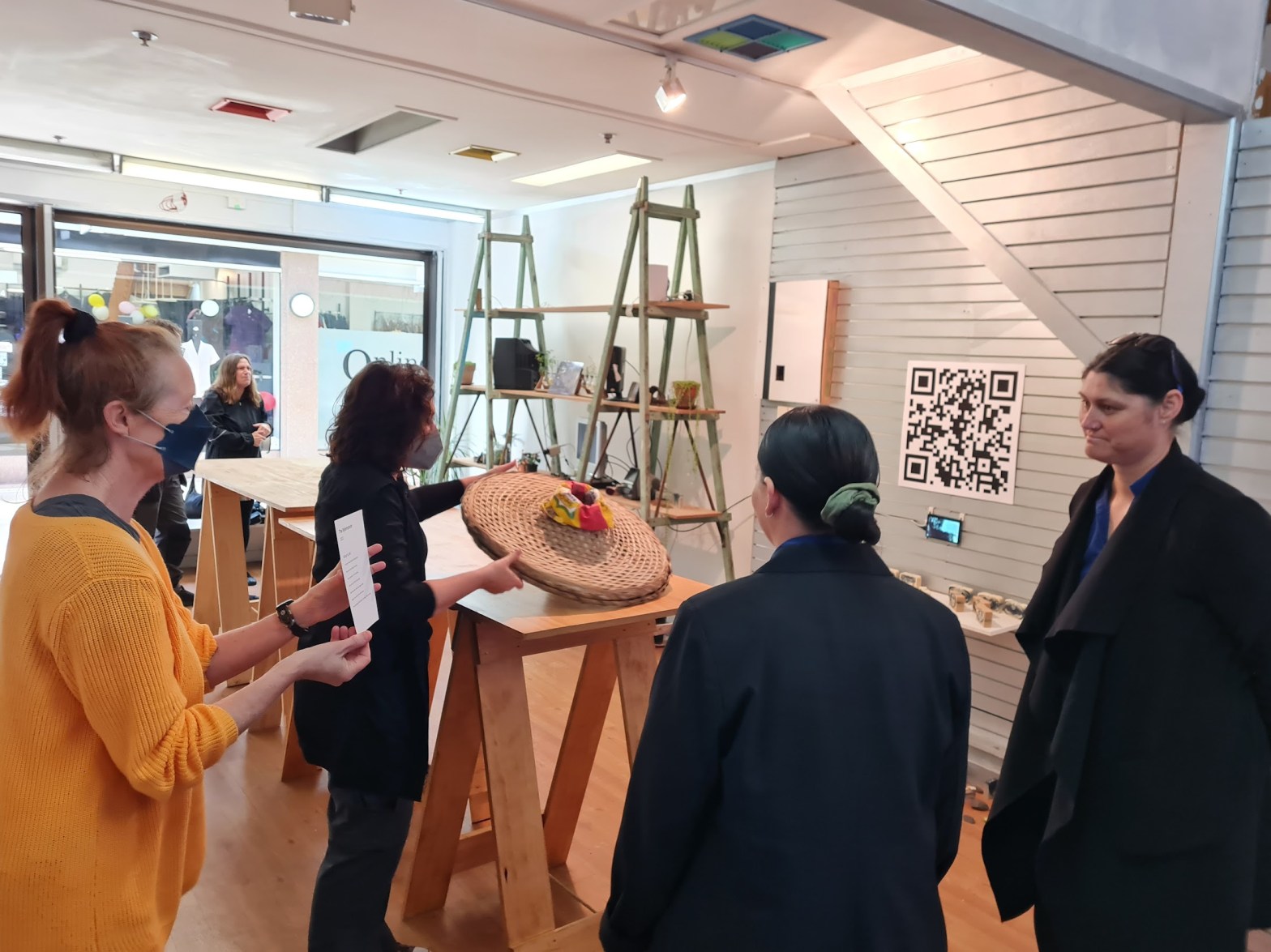
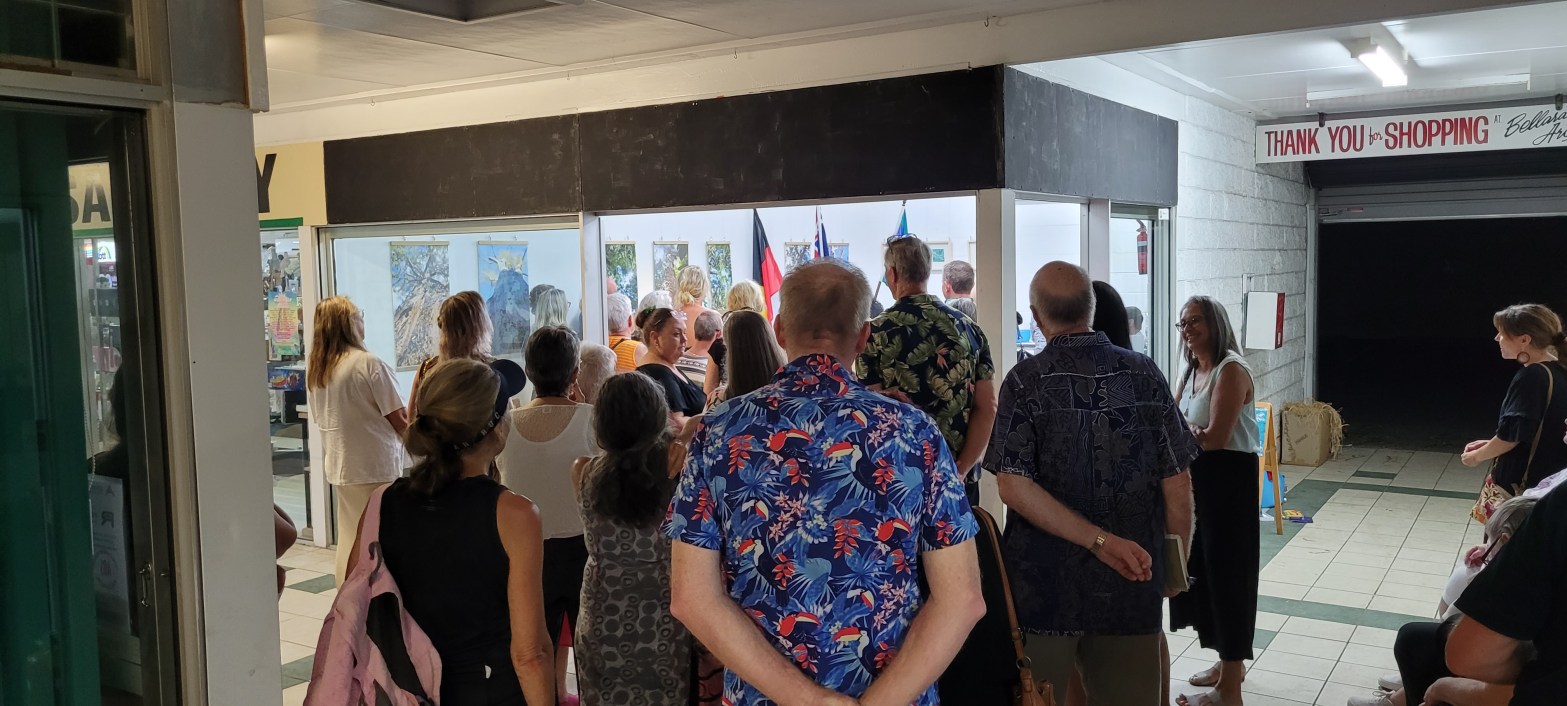
Creative technologist Kim Newall attended the 11 day in-person program and presented a talk as part of the public events at the Bribie Island Seaside Museum. Here are some pictures from his talk.
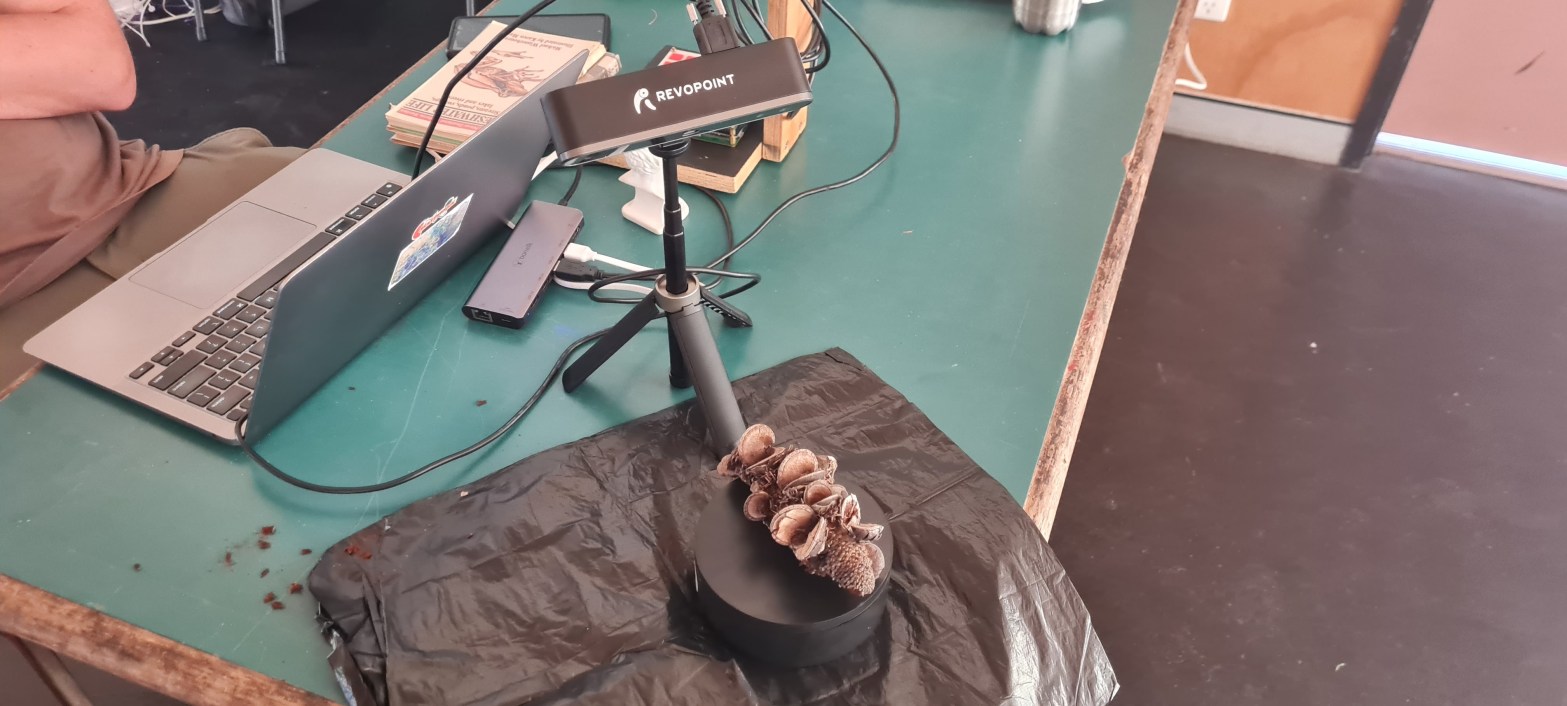
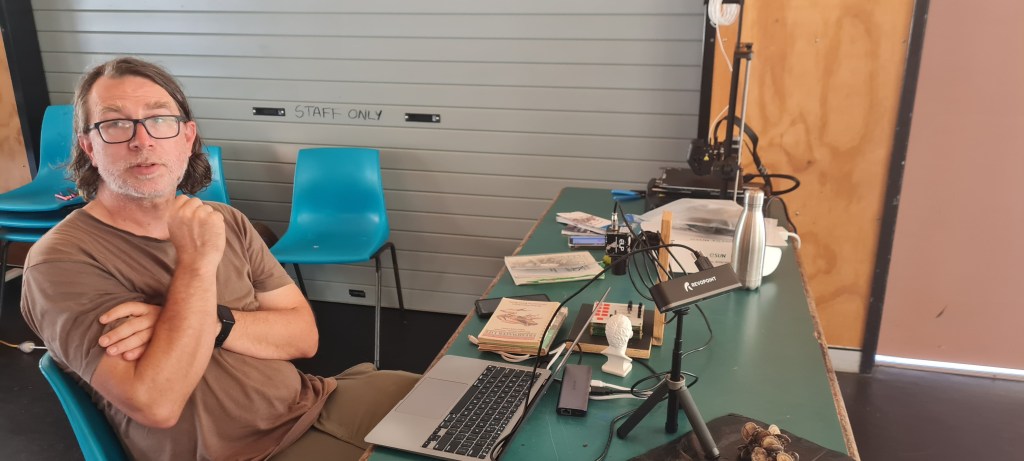
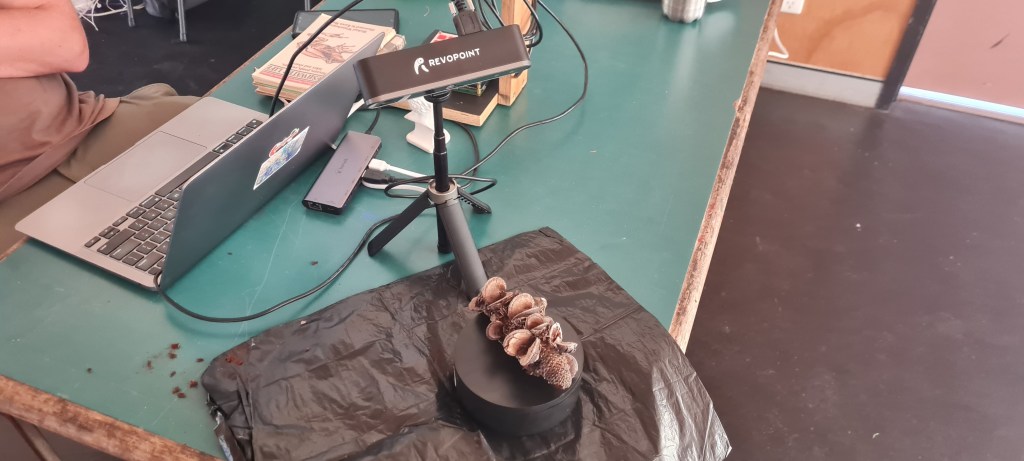
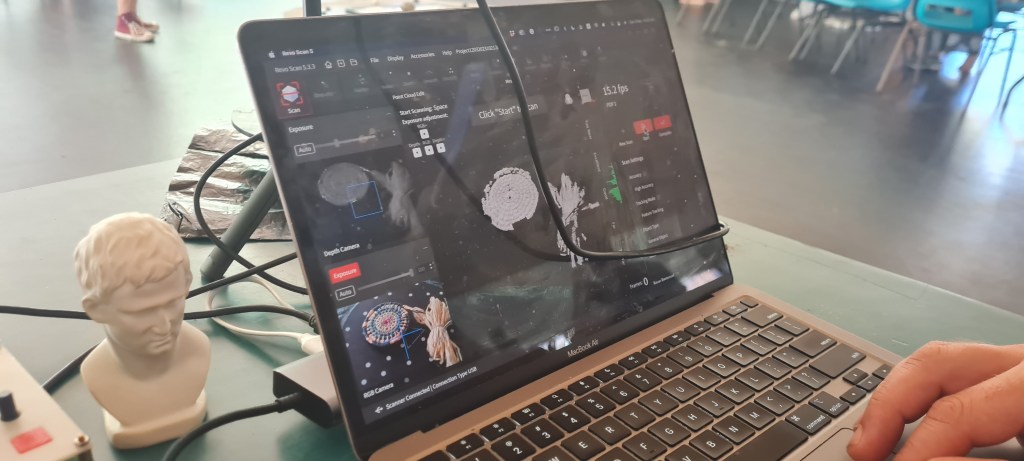
Kim also provided guidance and tech support to the Treecreate team, helping to trouble shoot and set up our 3d printer so we can co-create and run workshops. It was great to also see the 3d scanner that he brought along – nice piece of equipment!
We are very much looking forward to our continuing work together making threads of connection across the Tasman.
Arboreal Alterations: Tree modification and meaning making from the past to the present
“Within Australia and the Pacific region carved (dendroglyphs/arborglyphs), inscribed, marked and modified trees are an important expression of Indigenous visual cultural practice and heritage. The broader category of culturally modified trees includes scarring from canoe and implement manufacture and other cultural activities, as well as non-Indigenous practices of blazing and memorialising.”
“Culturally Modified Trees have become a growing area of archaeological enquiry. In recent years carved and marked trees have also been an inspiration for contemporary Indigenous and non-Indigenous artists. However, these ancient trees are increasingly under threat due to accelerating land clearance, as well as bush fires as climate warms and storms become more frequent. This symposium will investigate arboreal alterations covering historical, archaeological, art and contemporary perspectives.”
The symposium is hosted by the ARC ‘Archives in Bark’ Special Research Initiative, a collaboration between ANU, University of Canberra, University of Notre Dame Australia and the University of Western Australia.
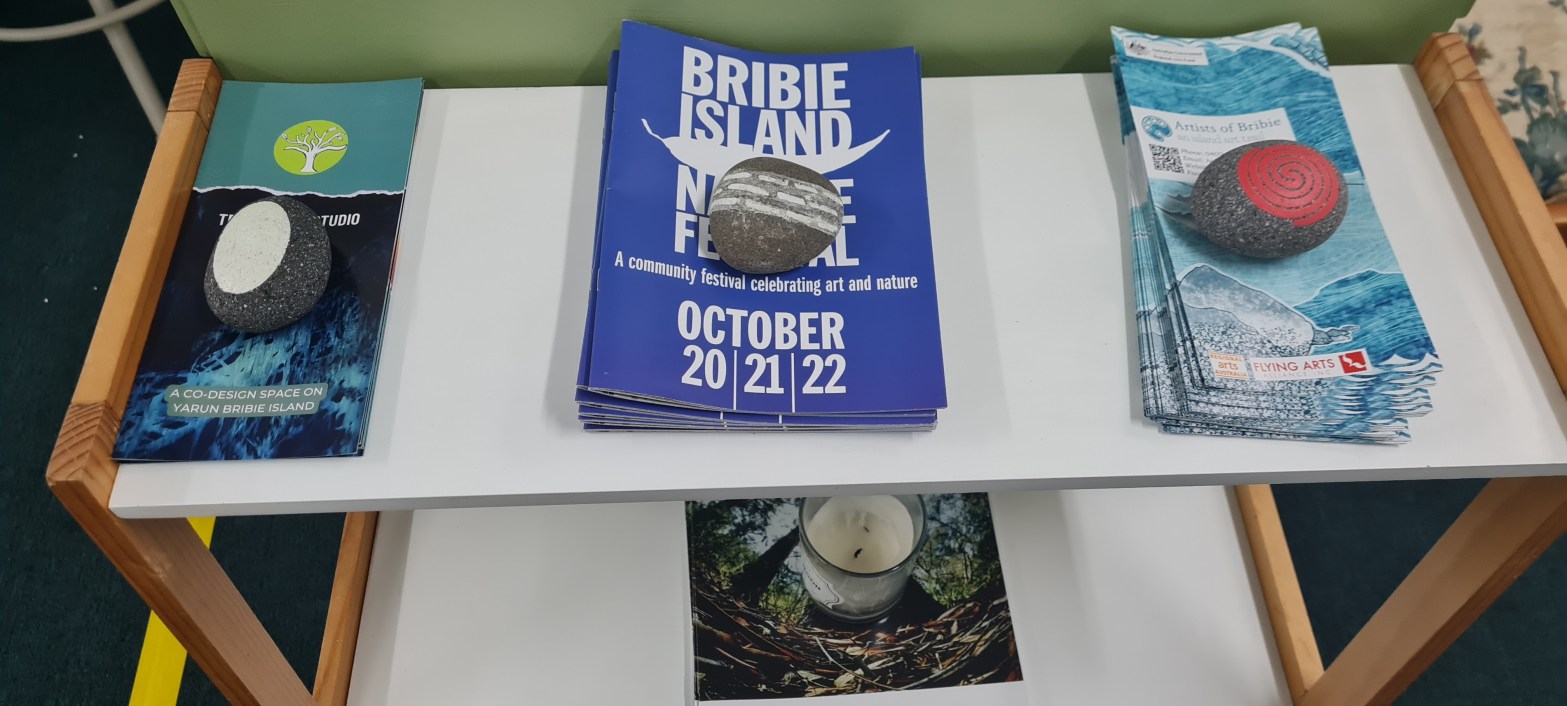
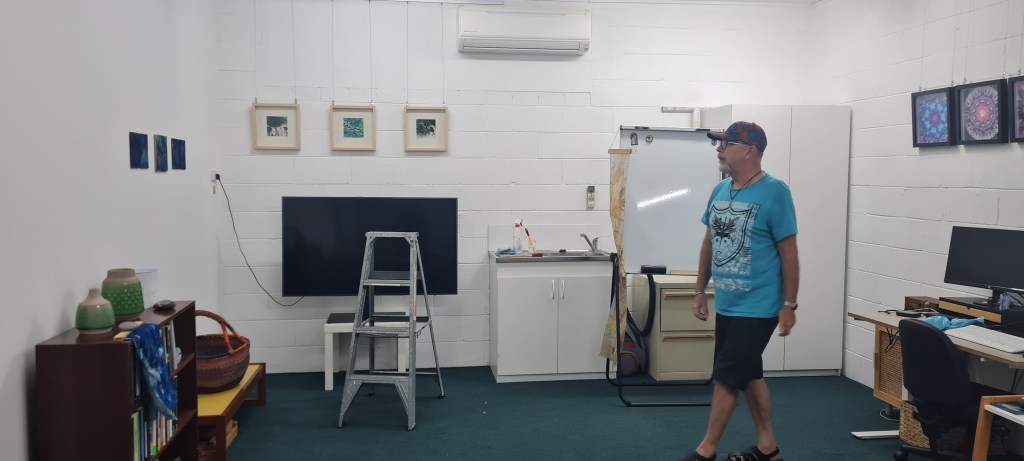
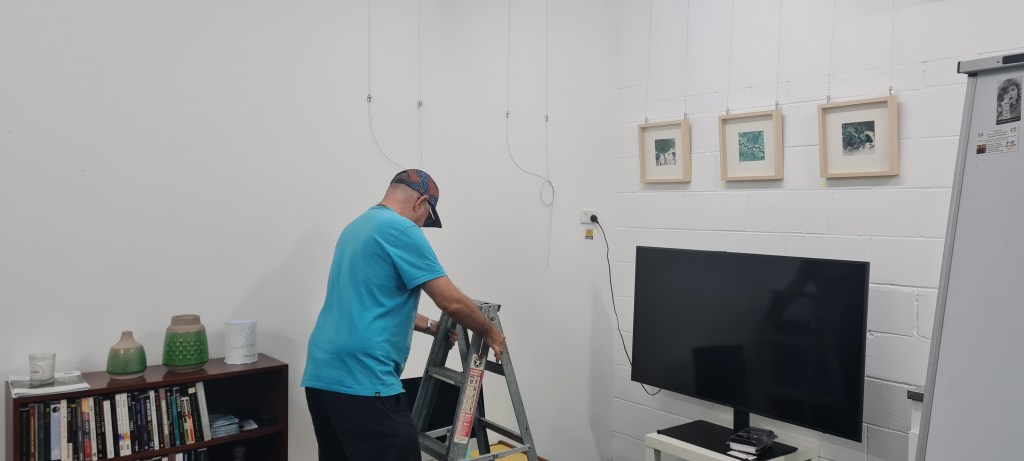
We have been busy with lots of organising in the studio for Bribie’s first Art Trail Open Studios this weekend, part of the Bribie Island Nature Festival ♡
Pop in and say hi at Treecreate Studio and learn more about our creative projects and plans – including the Weaving Water @ Yarun artsci program happening in late November on Bribie Island
BRIBIE ART TRAIL OPEN STUDIOS
Sat/Sun Oct 21/22 from 10am to 4pm
Artist talk at Treecreate Studio, Bellara Arcade, Benabrow Ave, Bribie Island @ 12pm both days. Find us down the arcade behind Bellara Newsagency.
It has been a long time between posts and it feels a a bit strange to be coming back to posting about my work/life. Perhaps once I get a bit more flow around writing again I will post a longer update.
For this post, just a few updates about events and happenings.
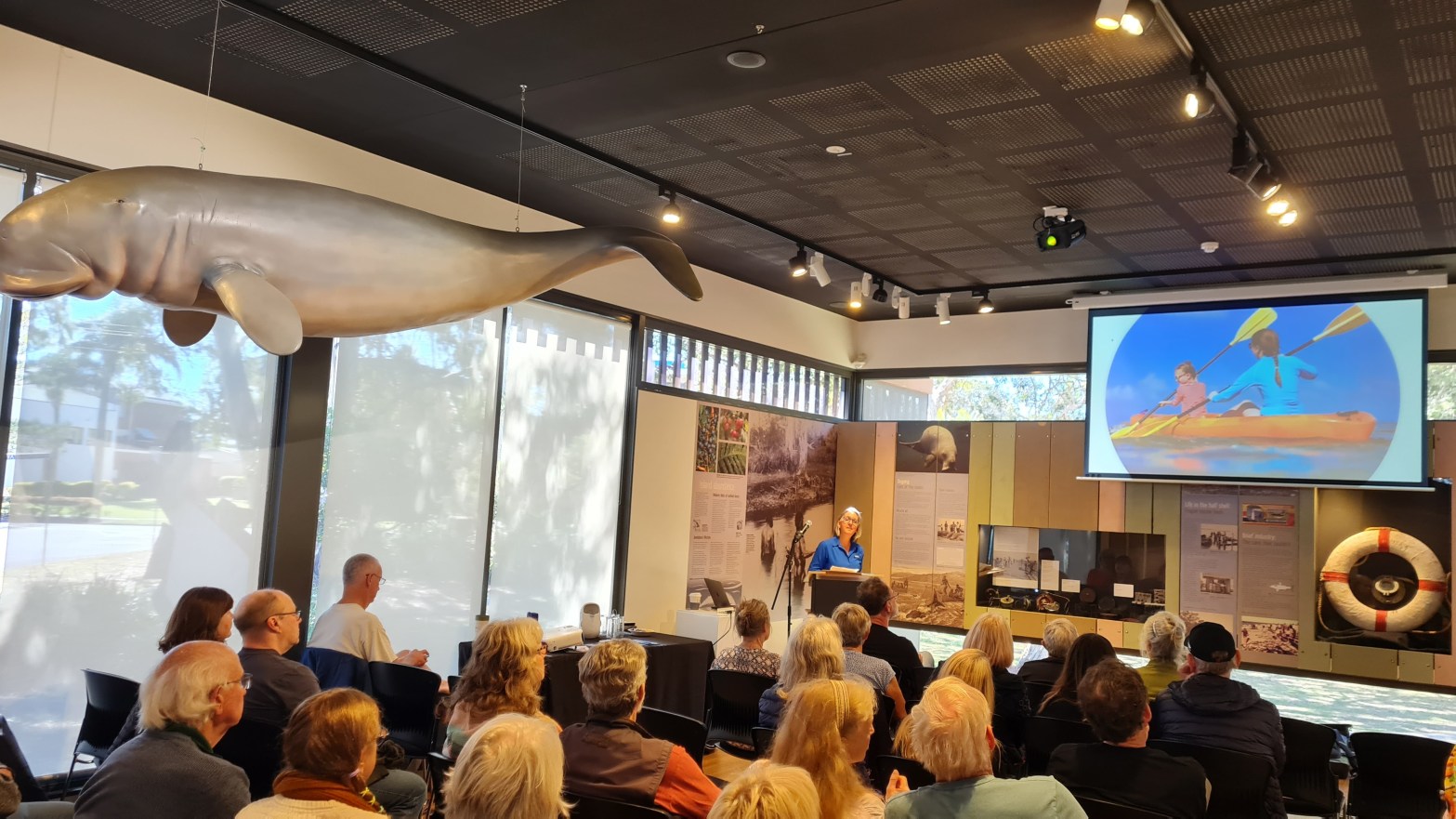
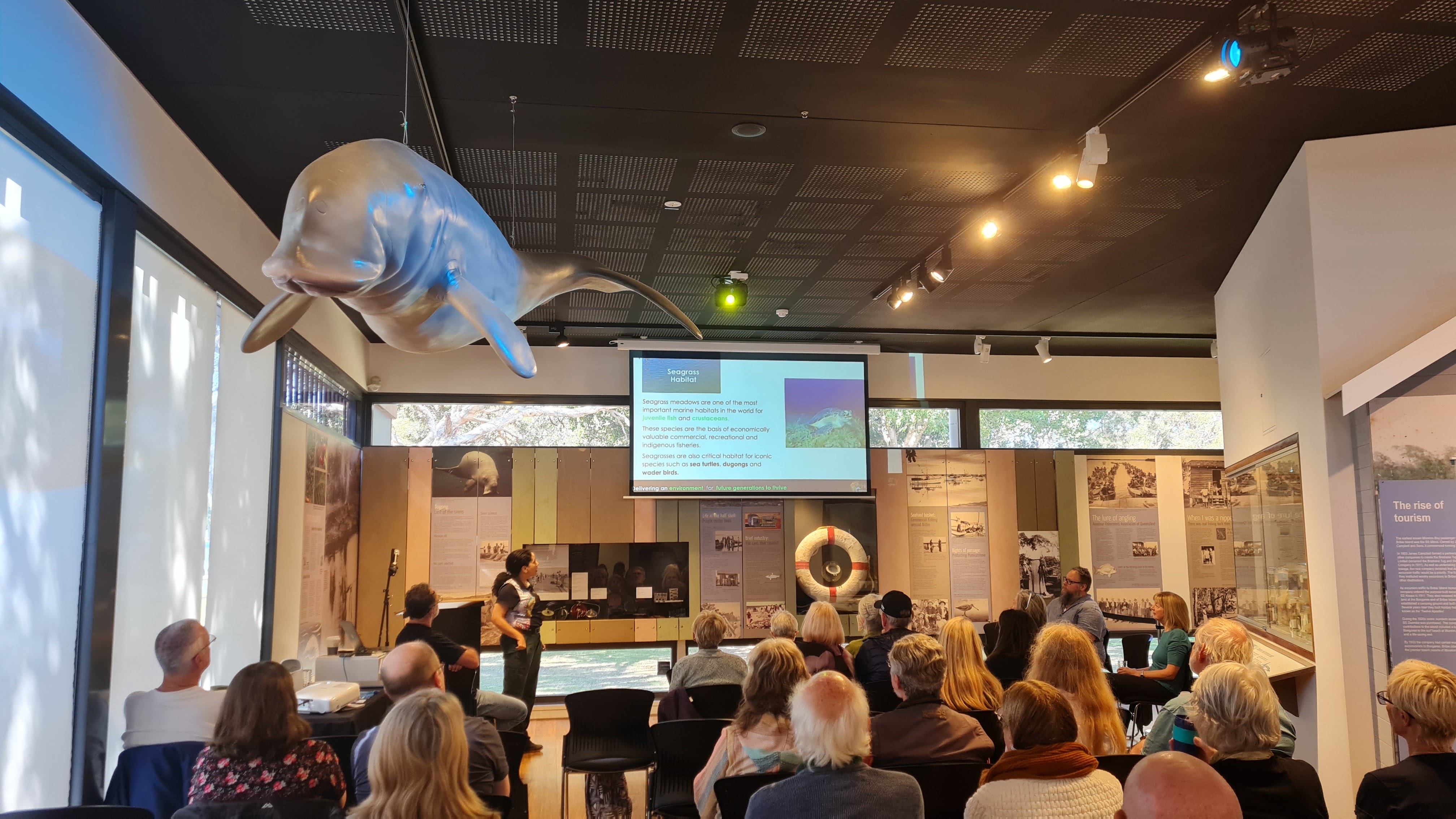
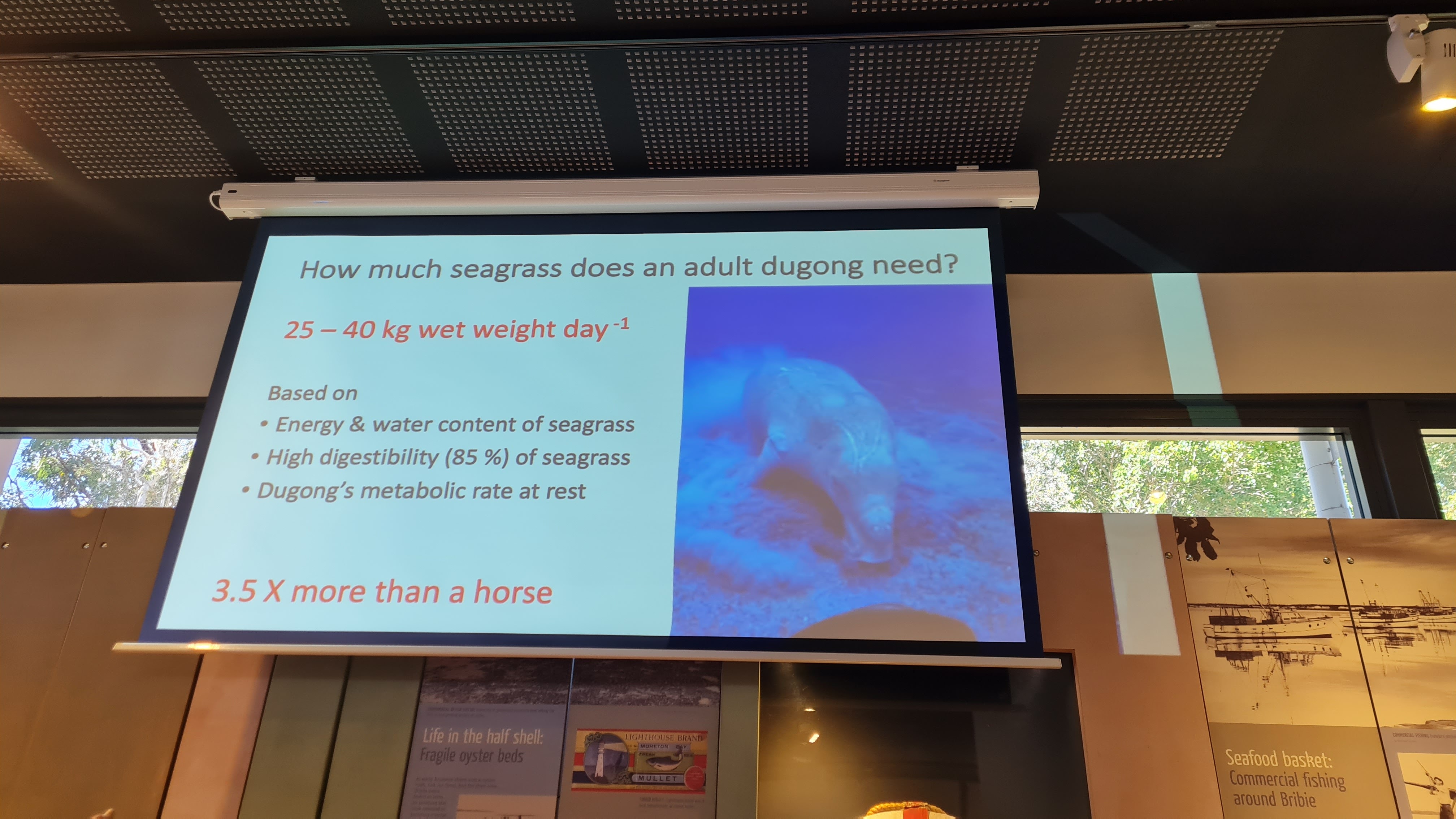
On 19 August 2023 there was a Dugong Symposium on Yarun Bribie Island at the Seaside Museum.
Coordinated by the BIEPA Dugong Diaries group (of which Tracey is a part of), there was a wonderful range of speakers including Dr Janet Lanyon, Gabriella Shuster, Brent Smith and our own Sherry Bruce. In between the speaker sessions Tracey shared love letters from Simone Johnson in Arizona and Kim Robertson in Abu Dhabi. Dugong diaries member Deirdre Reynolds also shared her love letter to the Dugongs.
From the Bribie Island Dugong Sightings Facebook page
From the Bribie Island Dugong Sightings Facebook page
From the Bribie Island Dugong Sightings Facebook page
Image by Tracey Benson
Image by Tracey Benson
Image by Tracey Benson
Image by Tracey Benson
Image by Tracey Benson
Image by Tracey Benson
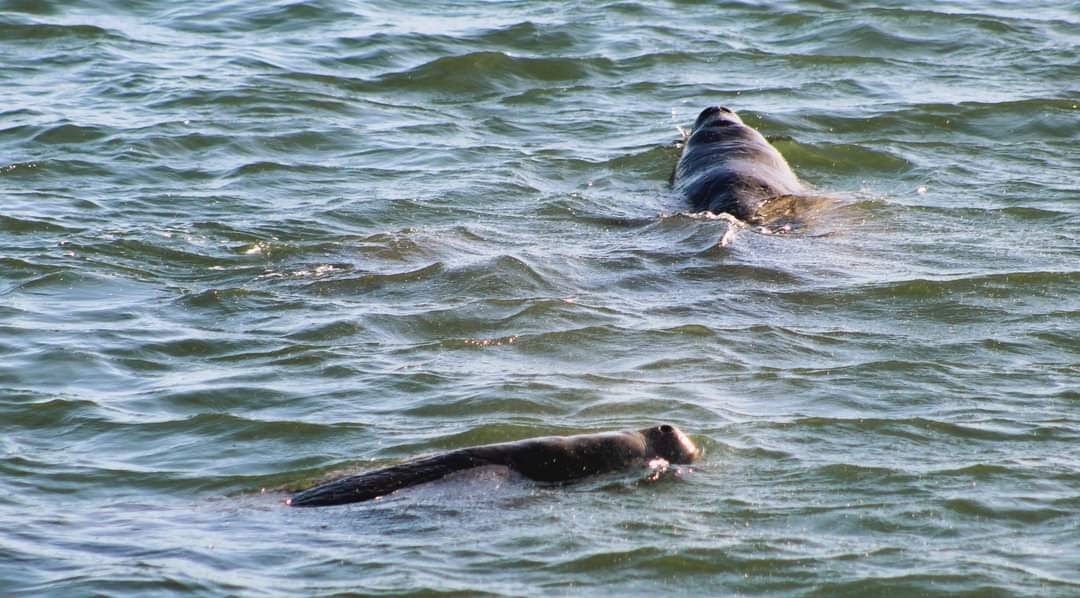
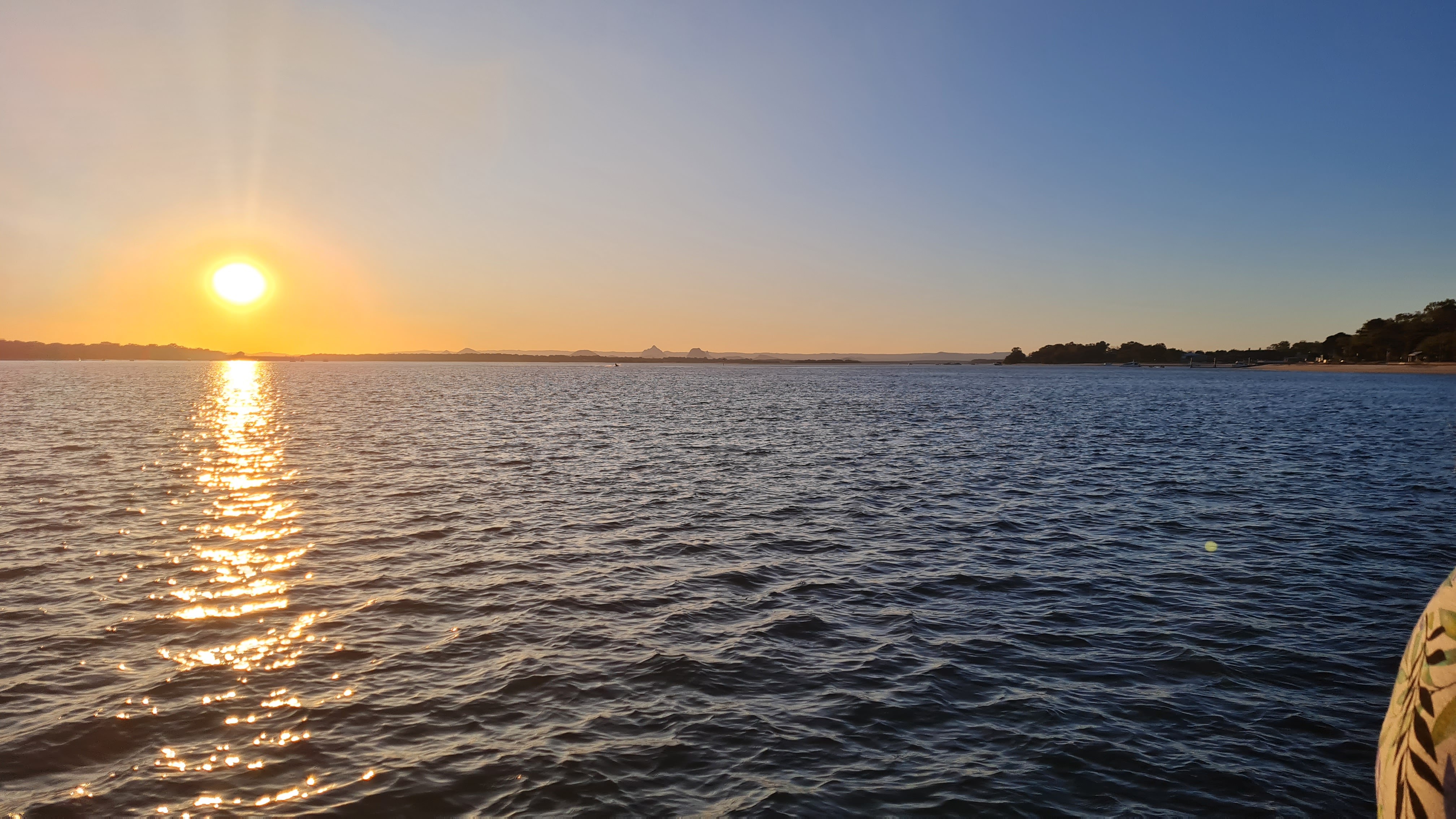
The Dugong Symposium also included a wonderful cruise on the Pumicestone Passage. To cap off an amazing day – we actually saw 4 dugongs ❤
So why are Dugongs important? They are a great indicator of ecosystem health and their diet consists of sea grass which is the world’s only flowering plant capable of living in seawater. Also sea grass is an incredible ally in the challenges of climate change. Globally, seagrass captures carbon up to 35 times faster than tropical rainforests, accounting for 10-18% of total ocean carbon storage despite covering less than 0.1% of the seafloor. Seagrass can also help protect our coast from damaging storms and erosion through dampening the force of waves and is very effective at removing pollutants from our waters. (WWF)
The next project by the Dugong Diaries team is to monitor the local seagrass and its health will impact not only the Dugong but us all.
The Dugong Love Letters project is an evolving collaborative project and you too can contribute your love letter to us at Treecreate by contacting us. Check out the 1st presentation of the love letters by Simone Johnson and Tracey Benson in December 2022
Applications for the 2024 exhibition program are now open.
The deadline for applications for the 2024 exhibition program is 31 October 2023.
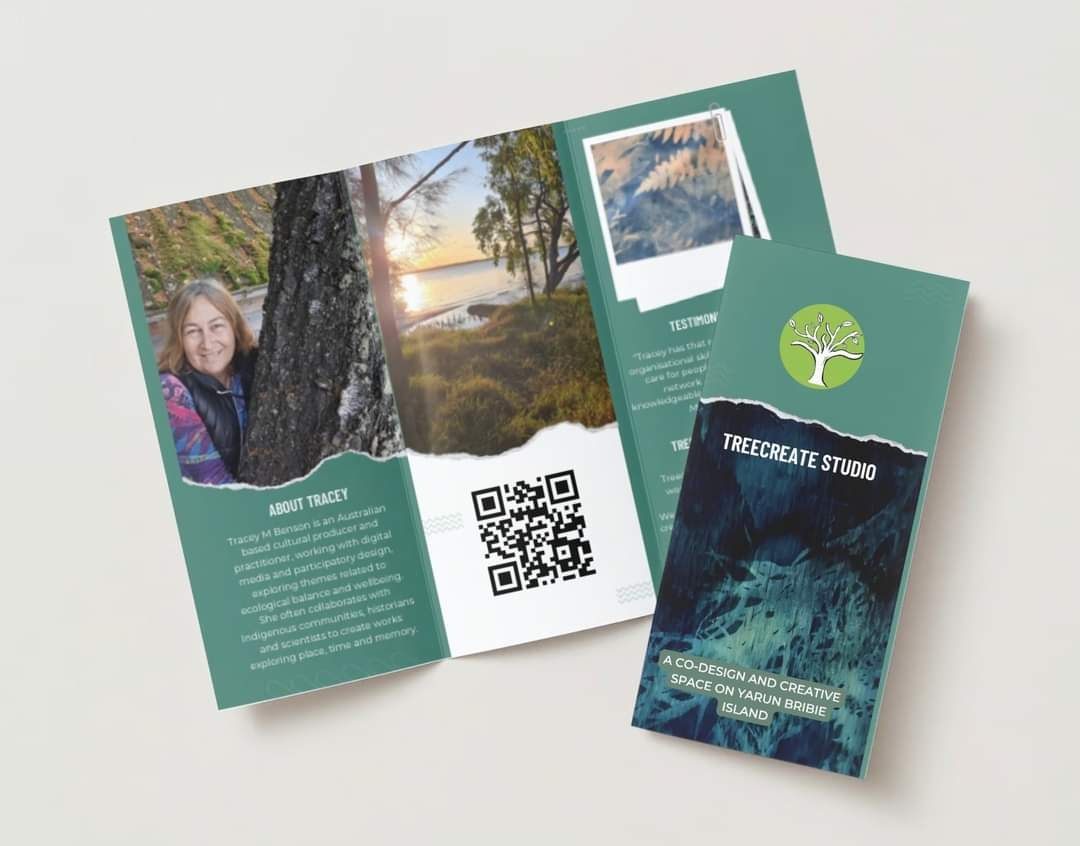
The Treecreate Studio is a contemporary art space, presenting emerging and established artists, located on Benabrow Ave, Bellara. We are seeking applications from artists across the Moteton Bay Region and beyond.
We are focused on supporting ambitious exhibitions of dynamic and innovative work and welcome proposals from artists at all stages of their careers in all mediums. Our exhibition program is based on shows running from 4–6 weeks.
We aim to provide a platform for contemporary artists from Yarun Bribie Island and beyond, providing a unique program of exhibitions for the development of artists and culture in the region.
APPLICATION GUIDELINES
APPLICATION CRITERIA The following criteria are all equally considered by the assessment panel:
APPLICATION: Complete Application including all requested information and visual support material.
INTENTION: Clear and communicated vision of the proposed exhibition.
CURATORIAL: Applications are considered in the context of program diversity. We are an equal opportunity organisation.
ACCESSIBILITY: We welcome applications from artists at all levels of experience from emerging to established.
REGIONAL FOCUS: Yarun Bribie Island-based contemporary artists who have not previously exhibited receive priority.
We have a strong preference for applications featuring new works, innovative ideas, and exhibition proposals unique to Treecreate Studio.
Applications are assessed by a panel of art-industry peers who select exhibitions for our program. The application selection process is competitive.
Applications are considered on merit, based on support material, images and text, alongside the Application Criteria.
We provide extensive professional curatorial, production and promotional support throughout the development and staging of all exhibitions.
For detailed information on making an application please contact us
In late May, Tracey headed over to Whangarei in Northlands Aotearoa to work with partners AwhiWorld on the continuing collaboration with Treecreate.
While Tracey was there, AwhiWorld and ThoTho facilitated the #Bios occupation of the Whangarei Art Museum for three weeks as part of the #Awhiincubator project.
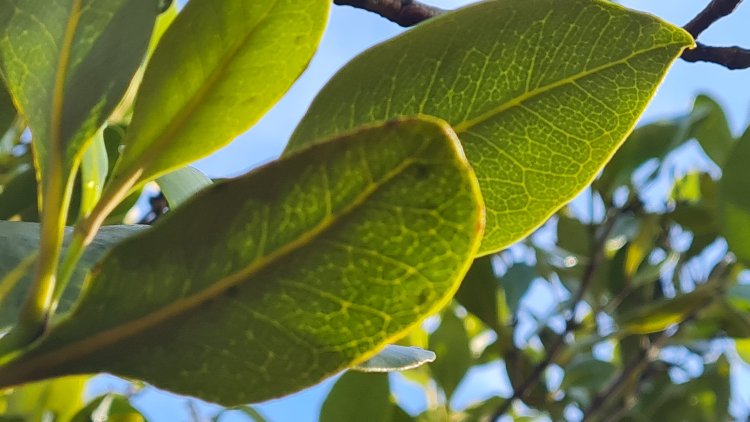
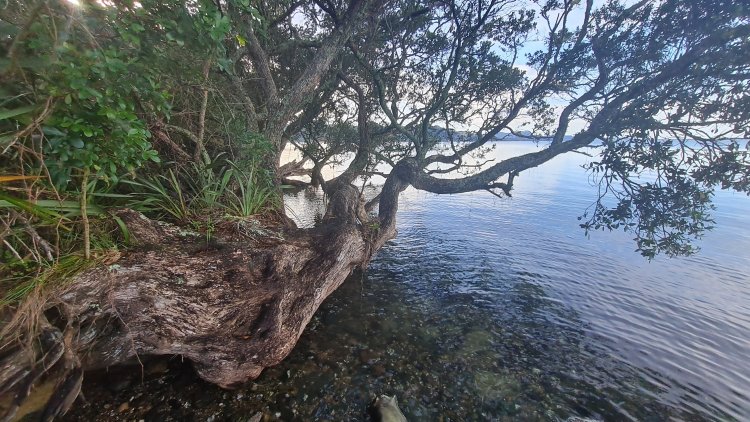
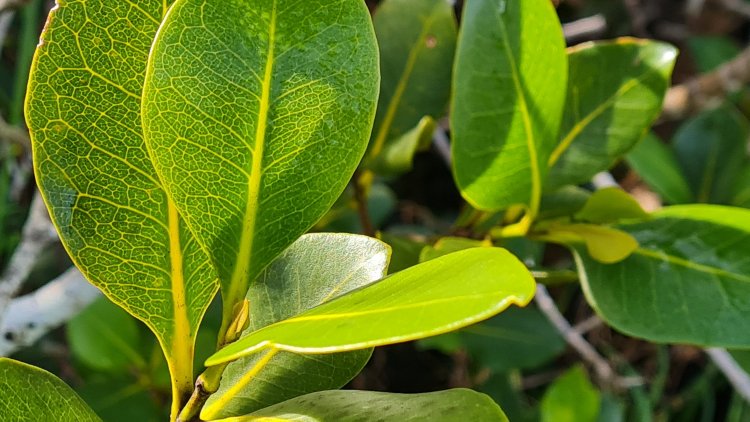
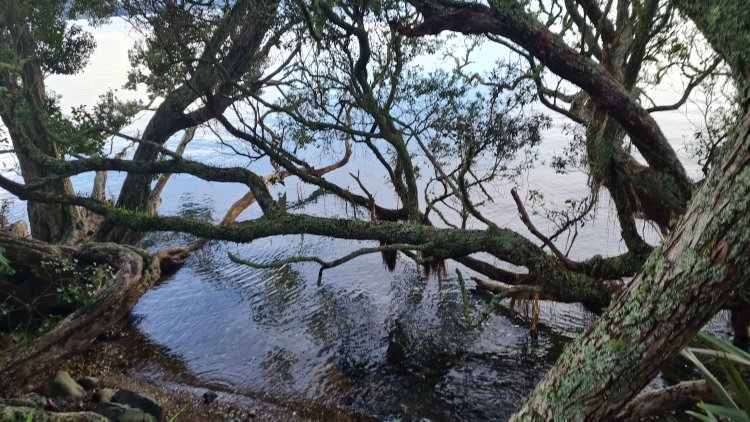
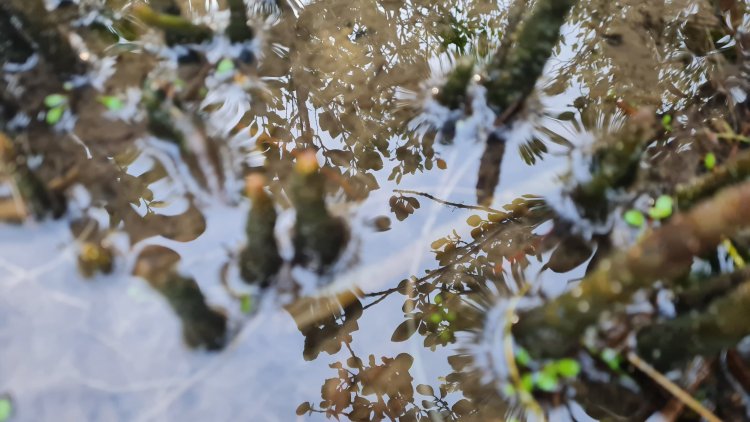
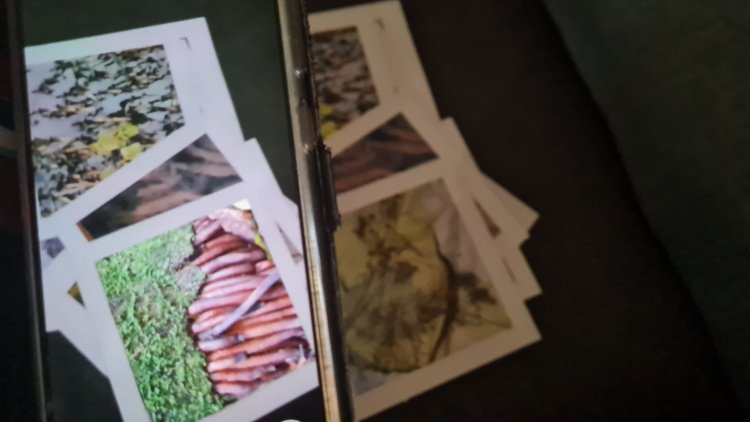
It was a very rich time, spent working on cyanotypes, video projections and some new augmented reality works and exploring the Mangroves along the shoreline on long morning walks with AwhiWorld director Dr Maggie Buxton.
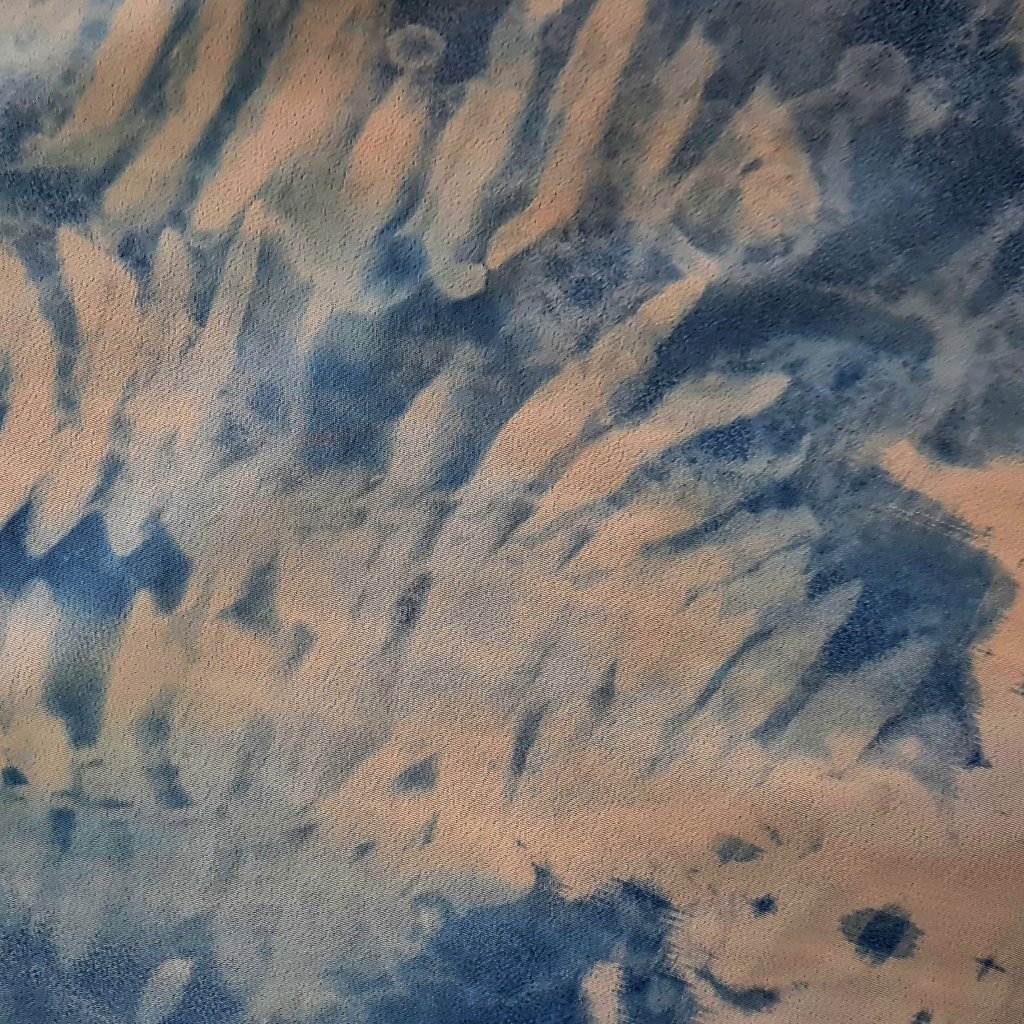
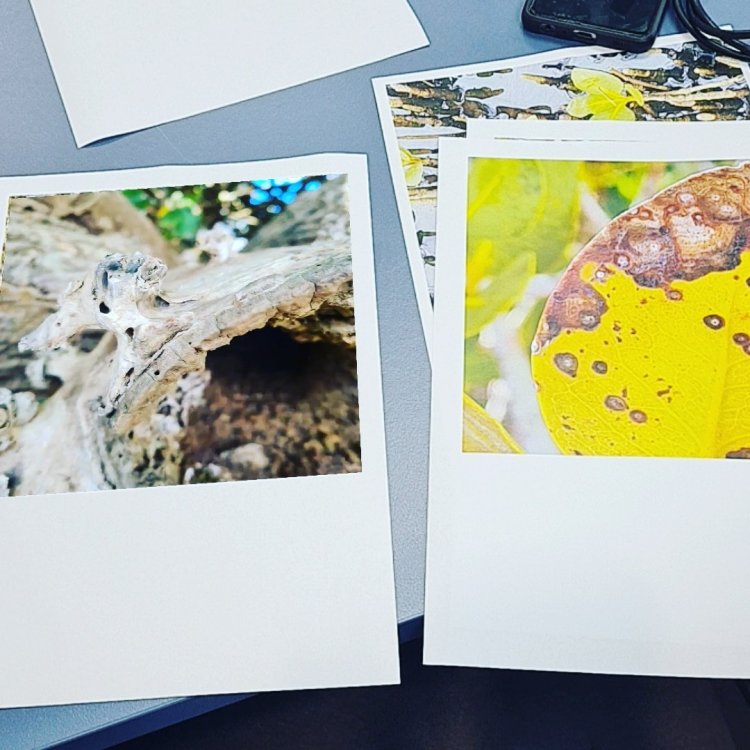
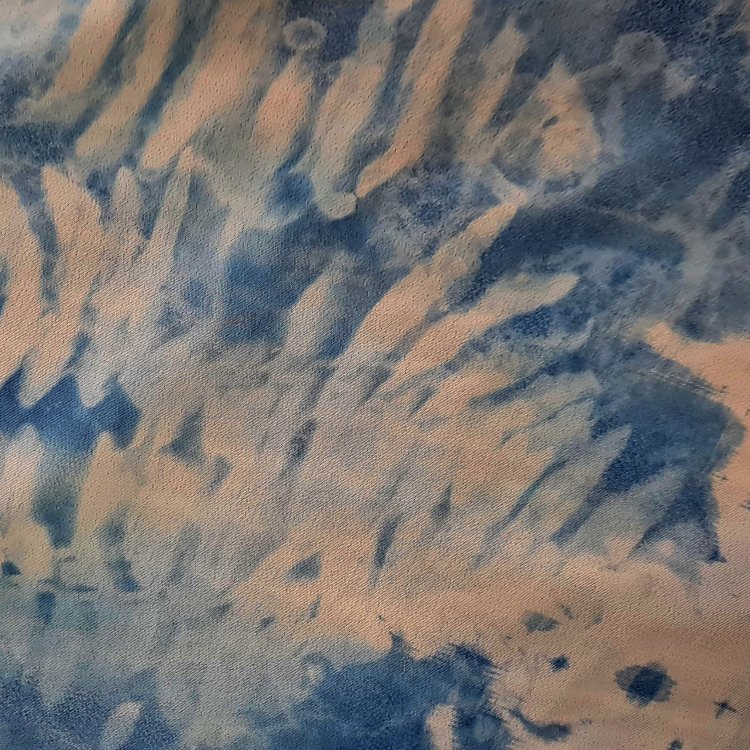
Cyanotype experiments
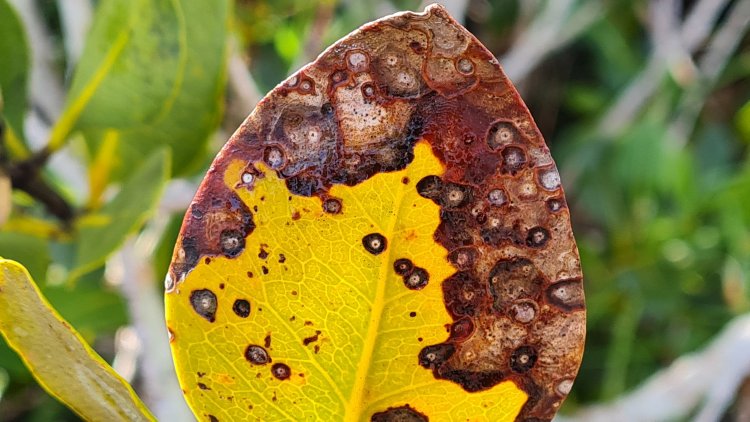
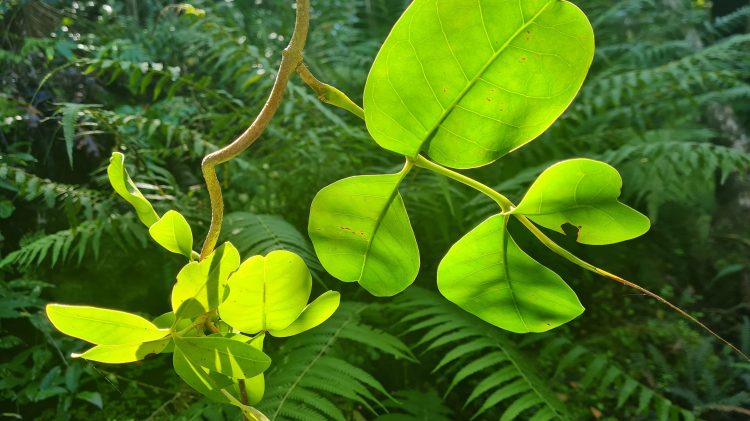
As part of the collaboration, making connections between Yarun and Whangarei’s ecosystem has been a constant theme, seeking to understand the differences and similarities, particularly around native and invasive plants and animals.
Photo by Tracey M Benson
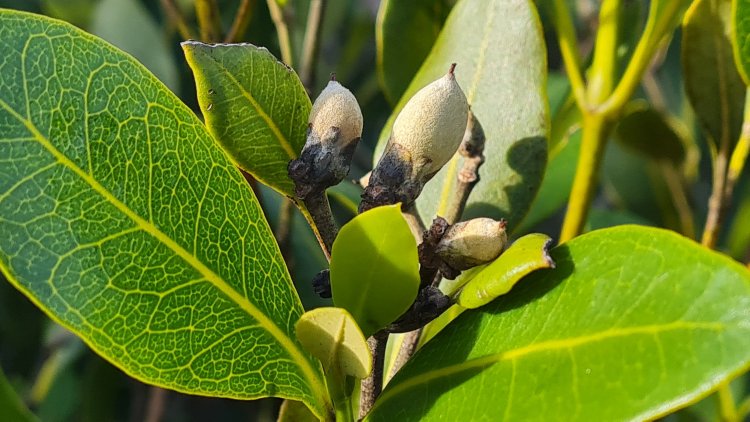
For example, there are 8 Mangrove species in Moreton Bay, all of which are protected. In contrast, there is only one species in Northlands and it is only protected in designated areas. The topic of Mangroves spurred some wonderful experimentation by ThoTho in harvesting and creating some Mangrove dye from their local creek, where they are growing in abundance.
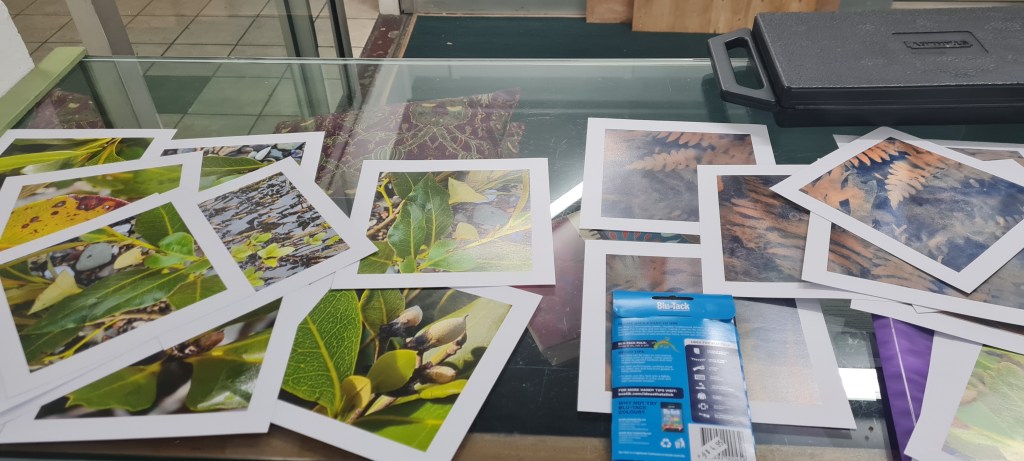
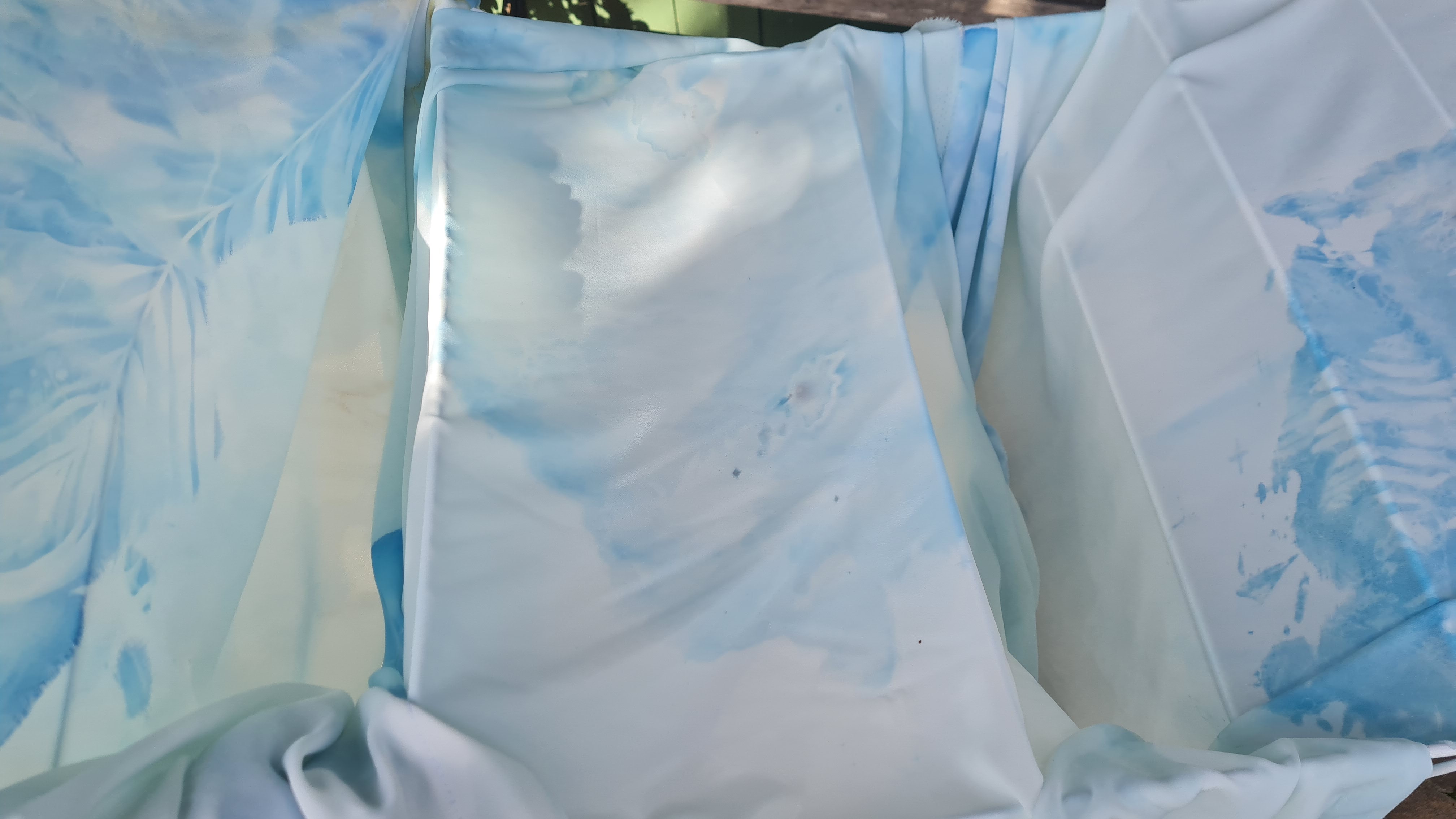
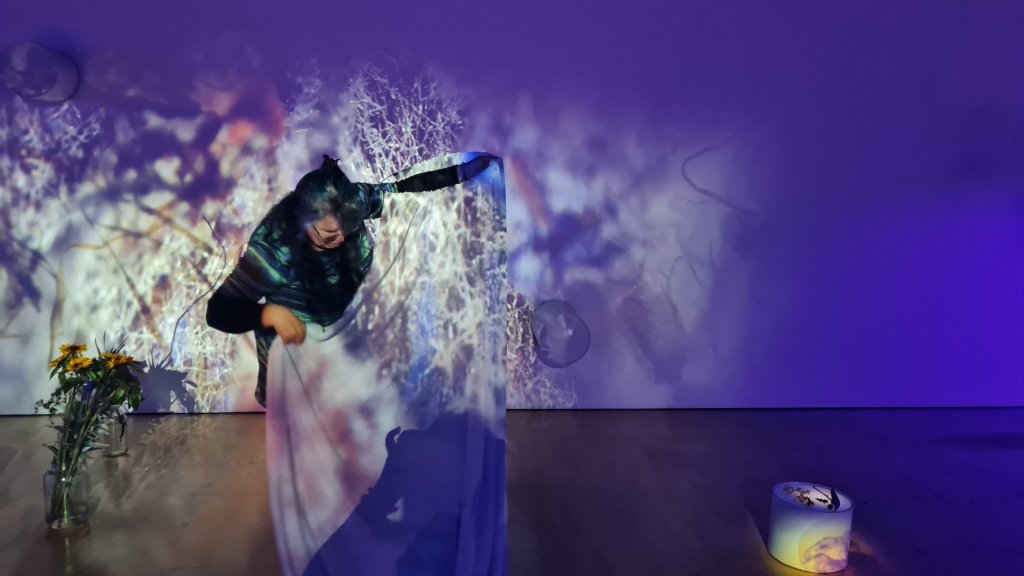
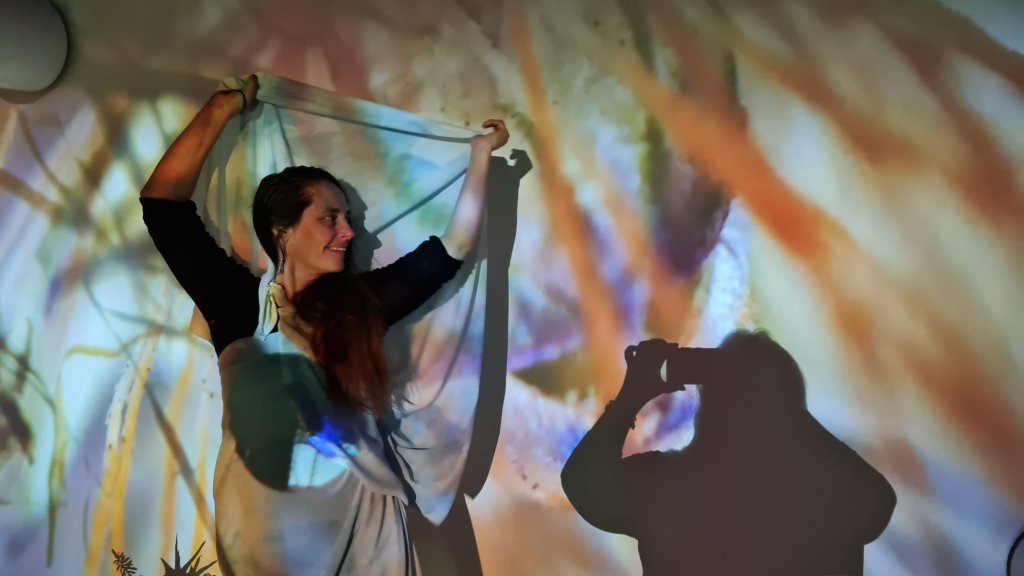
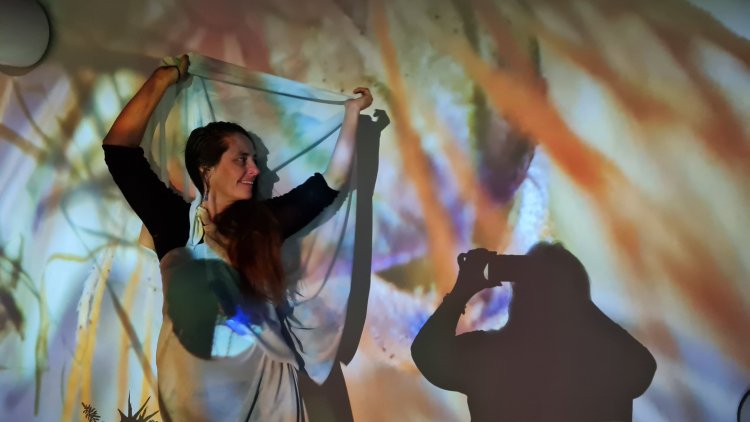
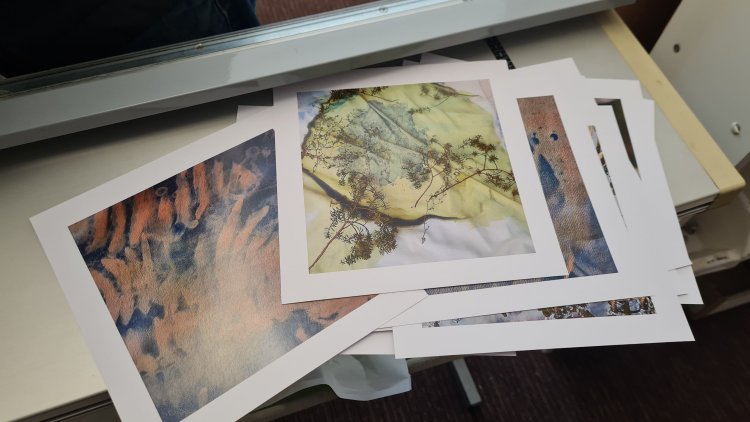
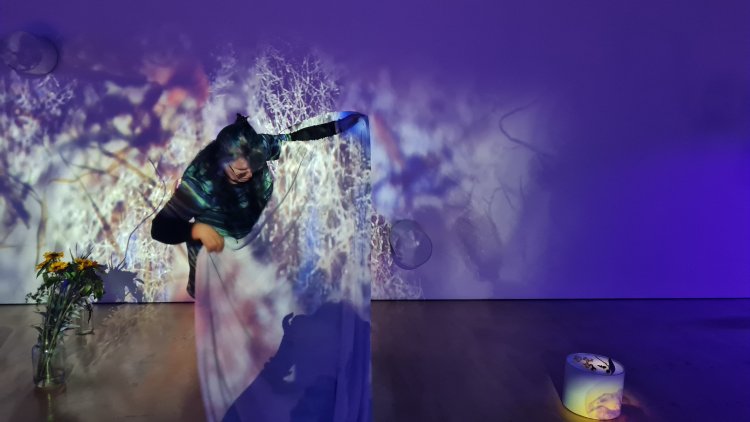
Part of Tracey’s work involved dyeing fabric with cyanotype sun prints of plants from Yarun and Whangarei. This also provided an opportunity to experiment in the #Bios space with the work with other artists. In the pictures below Tracey Willms Deane and Sharyne Lewis play with the fabric with projected images in #Bios.
Photo by Tracey M BensonCyanotype by Tracey M BensonPhoto by Tracey M Benson
Tracey also created some video projection work for #Bios which is part of this evolving project between Treecreate and AwhiWorld.
Video projection in the #Bios space – documented by Maggie Buxton.
There were also some amazing presentations happening as part of Bios. Professor Frances Joseph and her postgraduate students delivered a series of seminars (Grow Your Leather, Recycle and 3D Print Plastic Waste, Make Bio Plastic) as well as a workshop introducing community partners from the Awhi Incubator project to E-Textiles.
Below are a few moments captured over the time in Whangarei with Awhiworld. We look forward to seeing how our collaboration develops with Kim Newall and Maggie Buxton participating in Weaving Waters @ Yarun later this year.
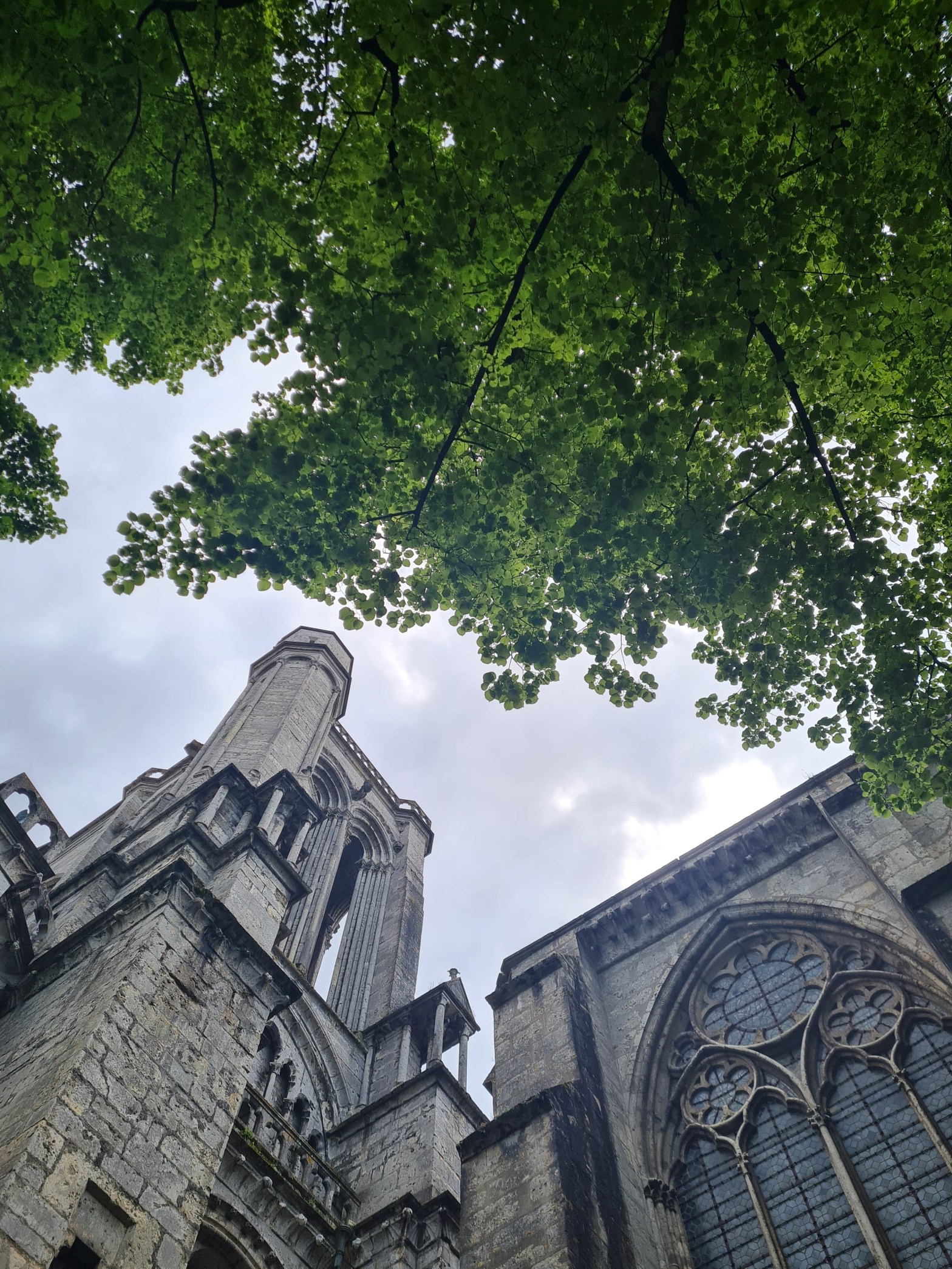
Over the past week Tracey and Marty have been recharging their energy in the medieval French village of Chartres.
It has been a hectic few months with launching the studio, working on projects and Tracey finally submitting her Masters of Applied Science by Research thesis.
Chartres is a magical place and one where you can feel the layers of time vibrate through your being. It is known for its beautiful gothic cathedral which has a labyrinth which is almost a thousand years old.
The site of the cathedral was also a sacred place for the Druids to meet, long before the Romans came. There is quite a lot of information about this online and in books, but in short it has been a place for worshipping the sacred mother for millennia. It is also one of the main leylines connecting other sacred sites in this part of the world according to the Ancient Origins website:
The monumental Chartres Cathedral hides within its walls stories which connect the world of ancient Druids, the cult of the Divine Feminine and Christianity. It is located on a leyline linking Glastonbury, Stonehenge, and the Pyramids of Egypt.
The Cathedral’s name “Chartres” comes from the Carnutes, a powerful Celtic people that lived in the region. Located southwest of Paris, France, in a small town of Chartres with 42000 inhabitants, the Cathedral has strong connections with the Knights Templarand sacred geometry.
The Druids held sacred rites in forests and underground grottoes that once lay at Chartres. According to M.L. Charpentier, an angel appeared and gave a message to the Druid priests that a Virgin would give birth to a “radiation of divine quality and power that affects the life of man.” (M. L. Charpentier, Les Mystéres de la Cathédrale de Chartres).
Tree connections
When the Druids were meeting at Chartres it is said that there was a grove of Oak trees where the cathedral now stands. The Oak is a sacred tree for the Druids and they frequently worshipped and practised their rites in oak groves. The word Druid may derive from a Celtic word meaning “knower of the oak tree” according to the Trees for Life website.
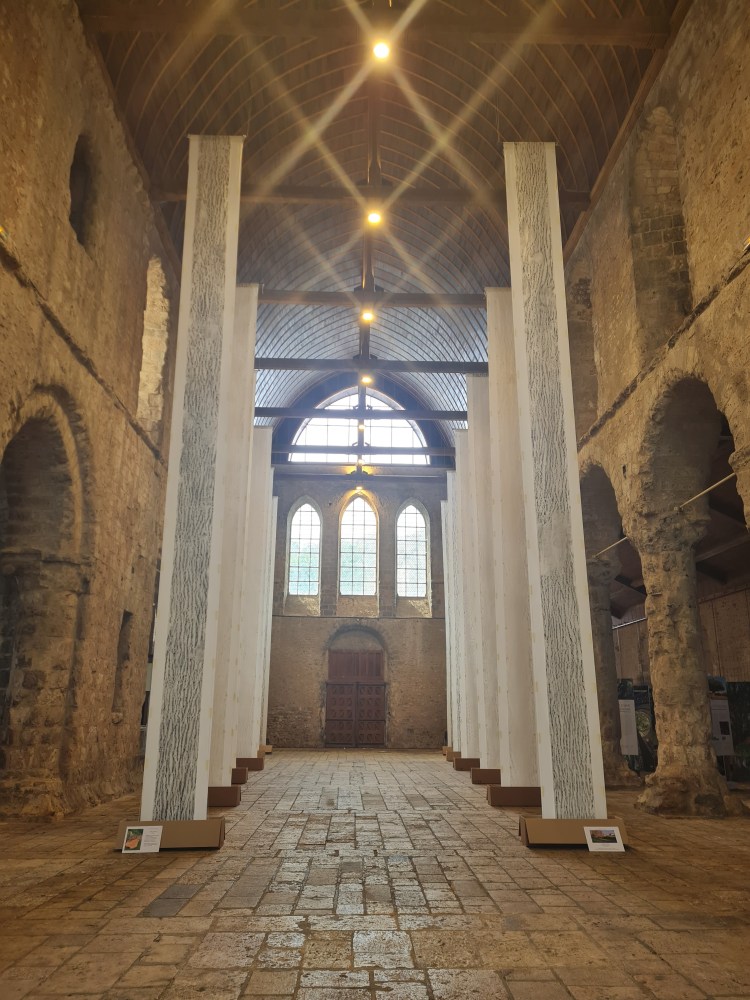
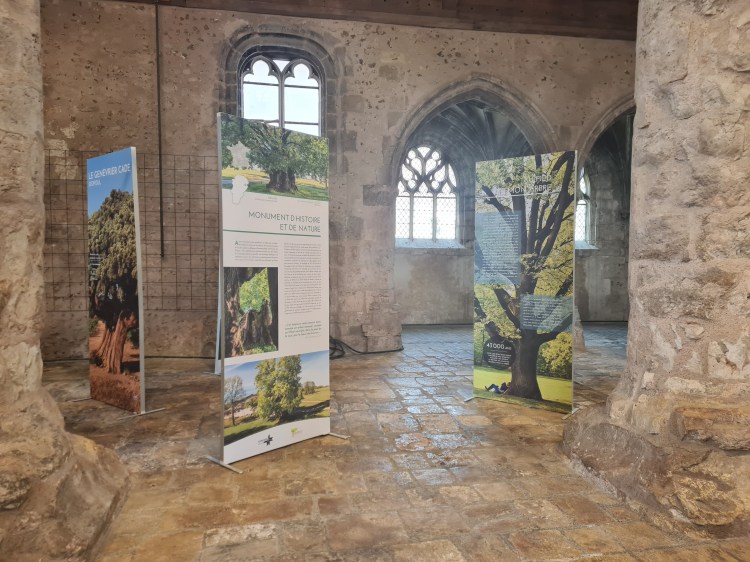
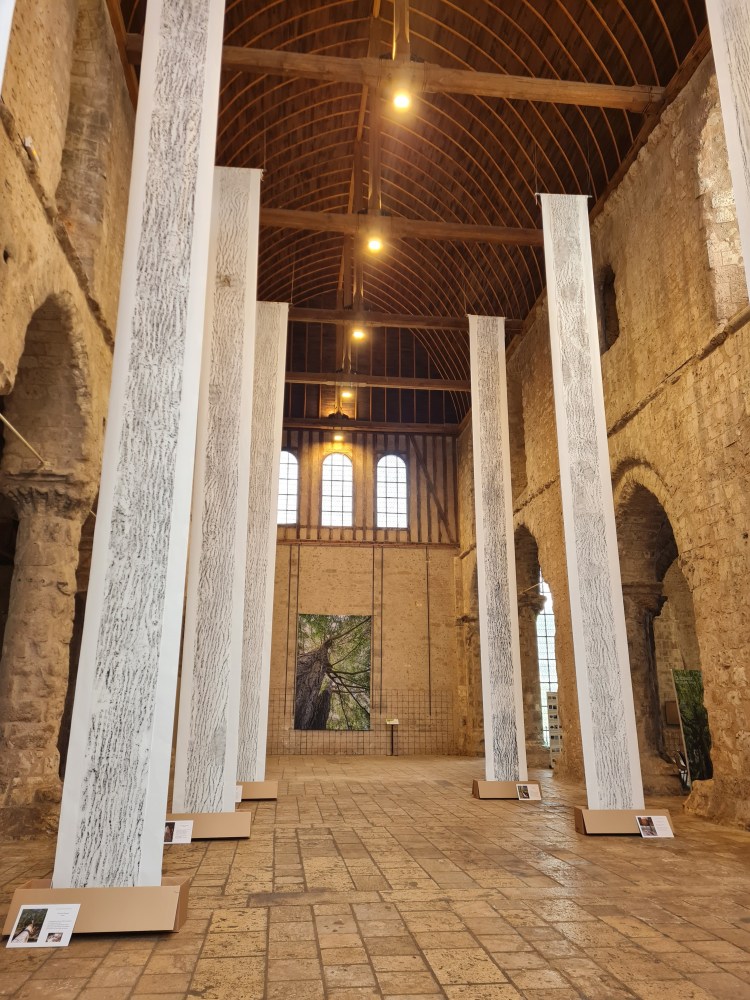
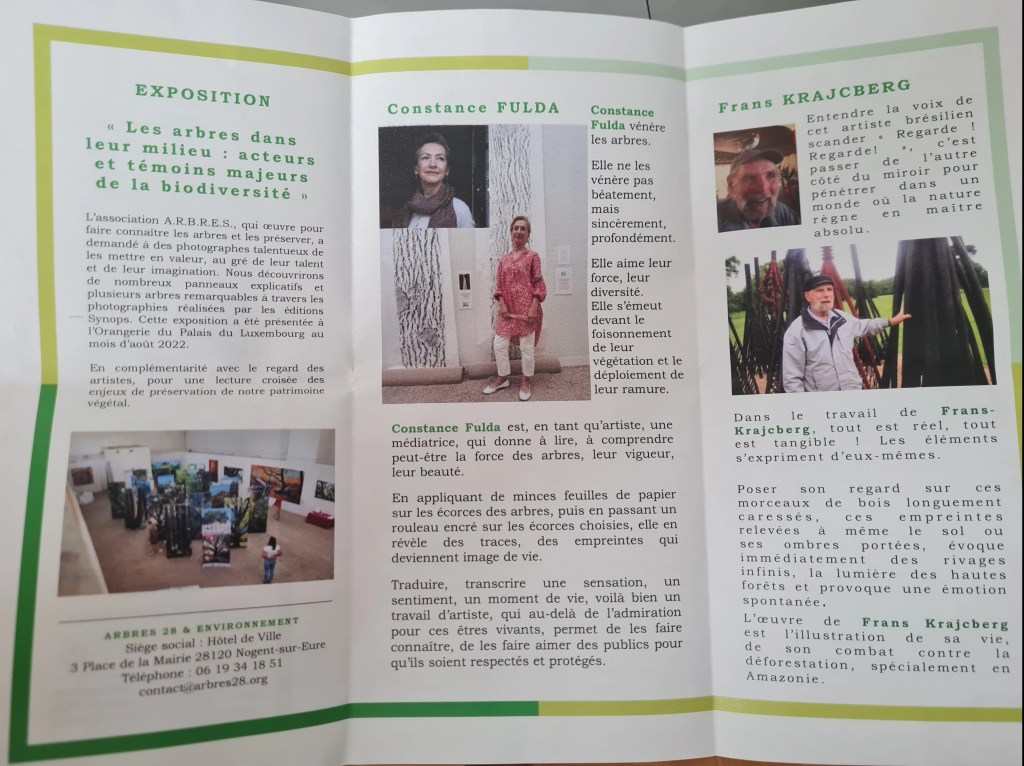
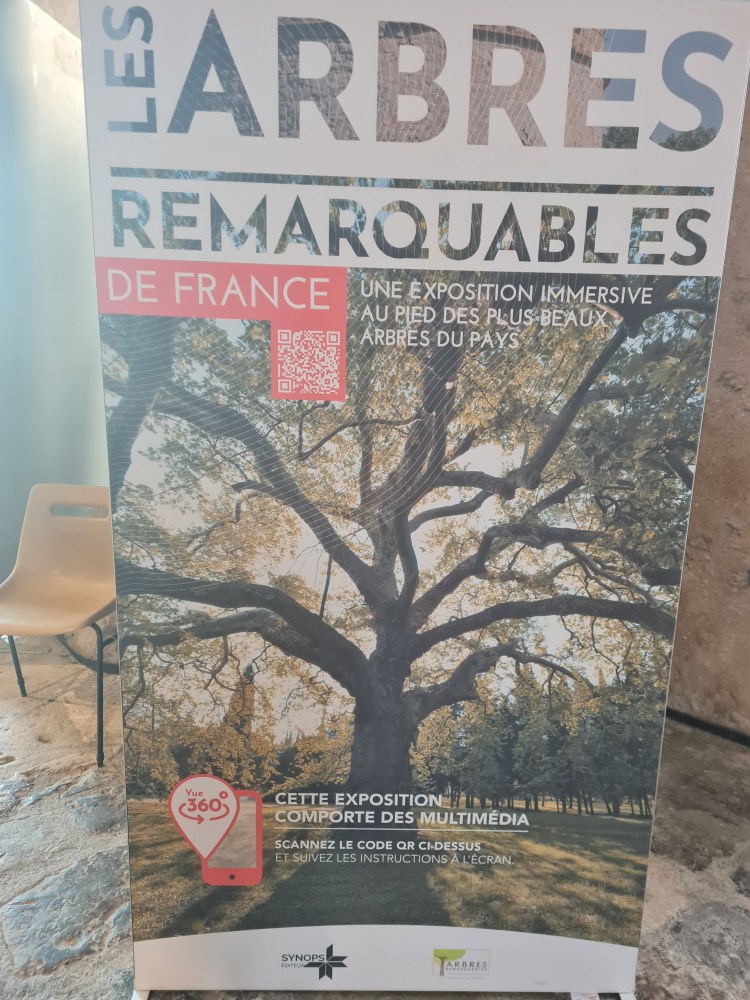
It seems timely that during our stay in Chartres we came across an exhibition in one of the smaller churches in Chartres. This exhibition was presented by the organisation Arbres28. Their values are very much in alignment with Treecreate. Here is an auto-translate summary of their role and association with Arbres.org:
ARBRES 28 et Environnement aims to promote the role of remarkable trees in the territorial ecosystem, by acting on different levers:
The enhancement of trees considered remarkable by giving them a label that guarantees their protection
Taking into account and respecting the tree as an individual, often located in a larger set of forest biodiversity, knowing that forests occupy a prominent place in the fight against global warming and against the degradation of biodiversity ,
The legal protection of the remarkable tree,
Raising awareness and informing the public by all means of communication, by disseminating knowledge of all kinds concerning remarkable trees and trees in general: public and private forests
The production, in partnership with professionals in education, the world of culture and/or the media, of educational materials, particularly for young people,
Exchanges of experiences and expertise with other professionals and/or representatives of the associative world.
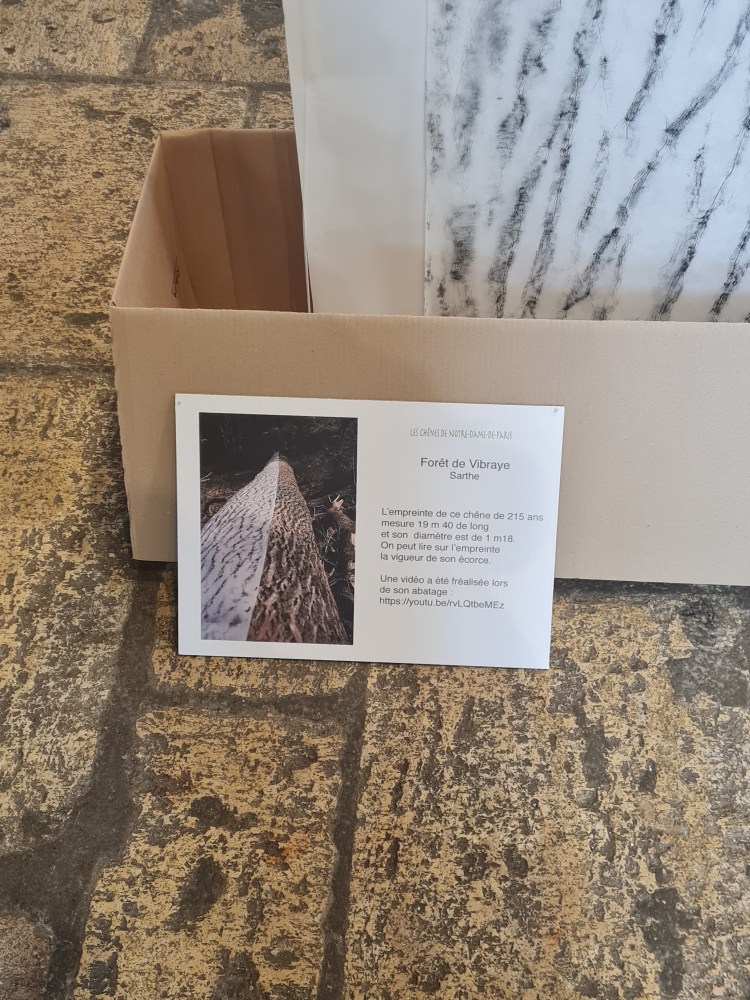
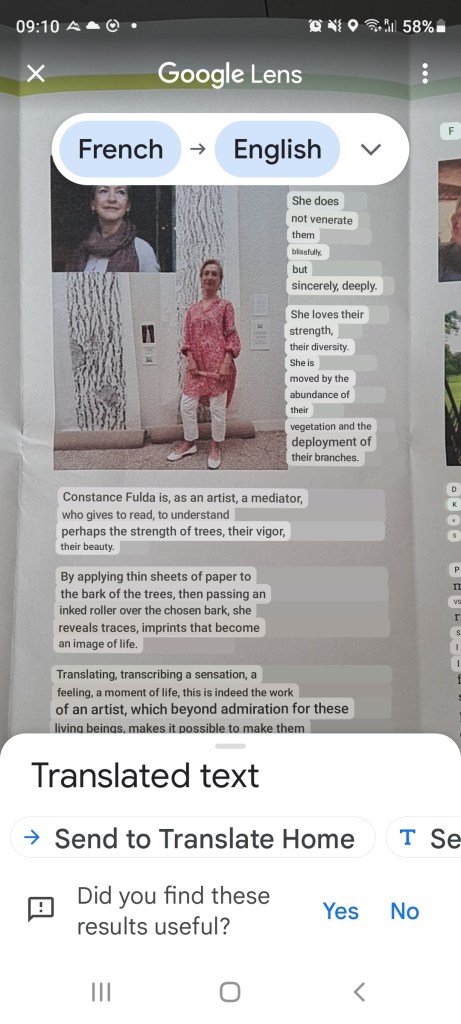
The exhibition featured the work of Constance Fulda, whose project The Oaks of Notre Dame had taken prints from the bark of some ancient trees which were destined to be built into the iconic French cathedral in Paris.
It really has been a beautiful time for contemplation and deeply listening to the earth and so much inspiration to bring back to the studio when we return to Yarun!











 Treecreate